July 19, 2026 • 2 hours
MBSE and AI no longer buzzwords but a fact if life. Many are adapting MBSE in their workflows in the aerospace industry. Along with that is the component of Artificial Intelligence in terms of Large Language Models, Chatbots and Neural Networks. EASA is doing much work on standardizing the application of AI. The future of Systems Engineering 2035 envisages a world with AI helping systems engineers and using system engineering for developing systems using AI components.
This workshop brings together both these components together. Model Based Systems Engineering uses open-source tools like Capella, and some online tools are helping aerospace engineers develop systems. Commercial software like System Architect, System Composer, Cameo for SYSML is also being used in the industry. There is a systematic way to develop these models. In the early 1960 code was developed in a haphazard way. The community came together and looked at better ways to develop software. This is very important in the way models are being developed.
Similarly, AI in the form of LLMs are being used to generate models and code. AI is experimented with in form of Neural Networks for image processing in side a system context. A strong set of requirements, models, constraints are necessary to ensure that the AI circuit works well within the bigger system context.
This workshop brings together both these with an exposure to the different techniques being used by the practitioner, the lessons learnt from having seen failures in the system development process. Some terms in AI and MBSE have been utilized very frequently without fully understanding the word in its depth. A taxonomy of MBSE terms, hands on demo on some tools, the correct way of performing Systems Engineering in the context of AI and MBSE will be covered in 4 hours.
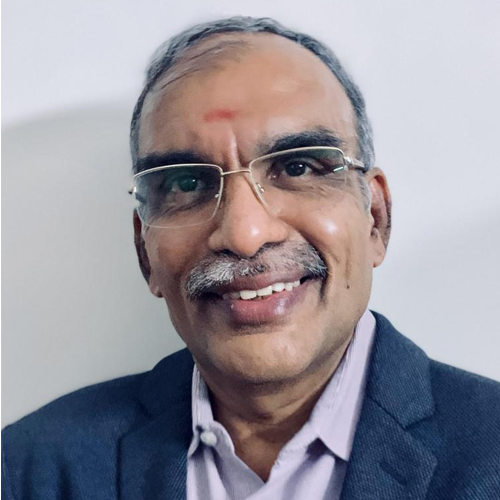
Dr Yogananda Jeppu
Dr. Yogananda Jeppu is a Fellow at Boeing. He has over 38 years of experience in the field of Control System Design and Implementation, Simulation of Aerospace Systems, Verification and Validation of safety critical systems. He is a BE in Electronics and Communication, from Mangalore University, and a Postgraduate in Missile Guidance and Controls from Pune University. He has a PhD in Certification of Safety Critical Control Systems using Model Based Techniques from IIT Bombay. He has several publications on Formal Methods, Randomized Testing, Orthogonal Array Testing, Model Based Systems Engineering, Missile Guidance and Control and Teaching. He has been awarded US patents for innovations in UAV and Radar. He has been awarded for his contributions to the Indian LCA Flight Controls program and the Indian Integrated Guided Missiles Program. He is the recipient of the 2023 INCOSE Systems Engineering Influencer Award – for significant contributions and community outreach in adoption of systems modeling and model-based systems engineering in industry and academia in India. He started his career in 1987, working on Missiles and Indian LCA program with Defense R&D Organization.
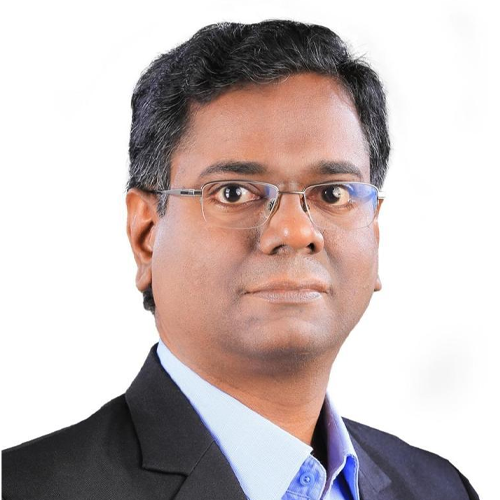
Dr Ramakrishnan Raman
Ramakrishnan Raman received B.Tech and MS degrees from IIT Madras, and Ph.D. from IIIT-Bangalore. He is a certified Six Sigma Black Belt, INCOSE Certified Expert Systems Engineering Professional – ESEP, Fellow – Indian Society of Systems for Science & Engineering (ISSE) and an IEEE Distinguished Lecturer. He has to his credit several publications in refereed international conferences & journals on complex systems architecture design and artificial intelligence – machine learning and has also received best paper awards. He is active in professional societies, including IEEE, INCOSE and SAE, and has held leadership positions in these societies, and has received multiple awards for his contributions. He has also served as Technical Committee Chair for many prestigious conferences including INCOSE International Symposium, IEEE CONECCT and SAE AeroCON. He is currently Senior Chief Engineer at Eaton. Prior to joining Eaton, he was Fellow at Honeywell Aerospace.
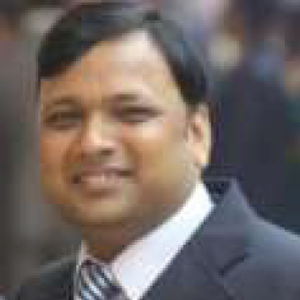
Umakant Goyal (Member, IEEE) received the B.Tech. degree (Hons.) in electronics and electrical communication engineering from IIT Kharagpur in 2003, and the M.E. degree in microelectronics from IISC Bengaluru in 2009. In 2003, he joined the Defence Research and Development Organization (DRDO) as Scientist-B. He is currently a Senior Scientist with the Solid State Physics Laboratory (SSPL), DRDO. He is working in the field of high-power GaAs and GaN-based MMIC design, catering to frequency applications up to the Ka band. His research interests include device modeling and PDK development. He was a recipient of the Alumni Gold Medal from IISc Bengaluru. He is also a recipient of the Mrs Minoti Baghchi Memorial scholarship during his BTech at IIT Kharagpur for extraordinary performance. Presently, his area of interest is in semiconductor devices, circuits and quantum RF receivers. He has published more than 30 papers in various international and national journals and conferences. He has filed two patents for his work in GaN technology. At present, he is heading the MMIC division at SSPL, DRDO, Delhi. He serves as a reviewer for various national and international conferences.
Talk Title: Foundations of RF and Photonic Systems
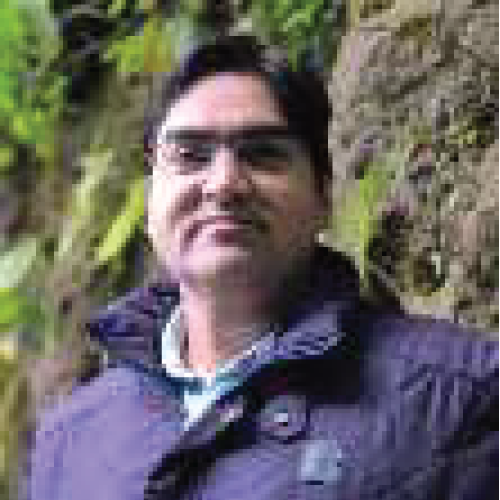
Sunil Sharma received the M.Tech. degree from IIT Kharagpur in 2004, and a PhD degree from IIT Delhi in 2020. In 2004, he joined the Defence Research and Development Organization (DRDO) as Scientist-B. His research areas are GaAs, GaN and various semiconductor materials and devices for RF and photonics applications. He published several papers in national and international journals.
Talk Title: Photonic Integrated Circuits and Microwave Photonics
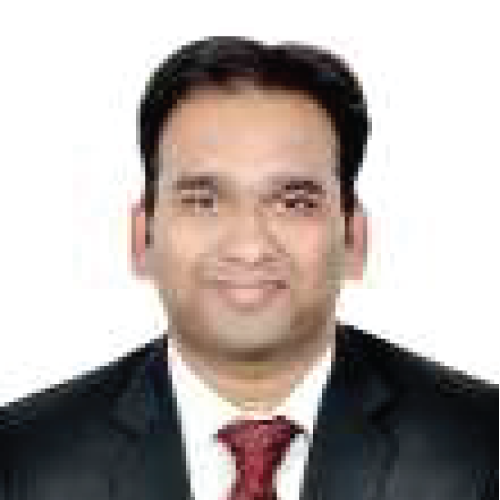
Dr. Ashish Jindal has over 11 years of rich experience in the field of analog MIC/MMIC design and has completed his PhD from the Indian Institute of Technology Delhi in the domain of analog RF MIC/MMIC circuit design. His areas of interest include microwave MMIC circuits, such as power amplifiers, LNAs, switches, filters, as well as photonic integrated circuits (PICs). He completed his B.Tech in Electrical Engineering from the Indian Institute of Technology Ropar and was honoured with the prestigious President’s Gold Medal. His exceptional technical expertise has been recognized by the Solid State Physics Laboratory (SSPL), where he received the Scientist of the Year Award in 2018 at the lab level and again in 2020 at the DRDO level. He also has more than 10 national and international publications, along with 2 patents.
Talk Title: RF, Photonic, and Quantum Receiver Architectures
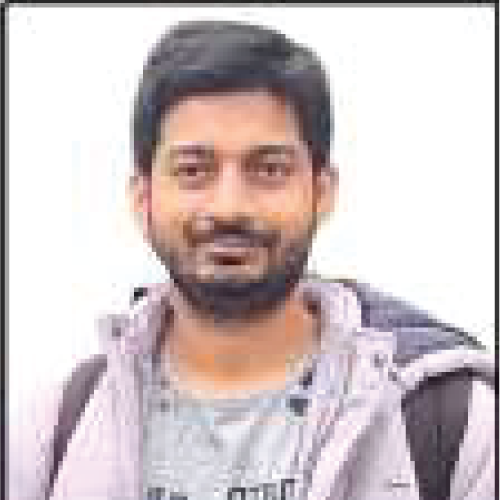
Rajesh K. Singh received a B.Tech. degree in Electronics and Communication Engineering from UPTU, Lucknow, India, in 2010, and an M.Tech. degree in Microwave Electronics from Delhi University South Campus, Delhi, India, in 2013. He received his PhD degree in Microwave Engineering from the Indian Institute of Technology Delhi (IITD), New Delhi, India, in 2018. He was an RF consultant at Chipwire Technologies Pvt. Ltd. (August 2018 – December 2018). He was a Postdoctoral Researcher at the Department of Information Engineering, University of Pisa, Pisa, Italy (Feb 2019 – Dec 2021). He has been working as an Assistant Professor at the Department of Electronics Engineering, Defence Institute of Advanced Technology (DIAT), Pune, India, since January 2022. His research interests include Microwave Passive and Active Circuits, Wideband Antennas for EW Systems, Active Integrated Antennas (AIAs), RFID, EMI/EMC, Reconfigurable/Smart 2D and 3D antennas, Smart Gloves, and Antenna modules for Automotive. He has published more than 70 international journal articles and conference contributions. He published a book titled “Reconfigurable Active and Passive Planar Antennas for Wireless Communication Systems” in 2022. He is the Editor of the IETE Journal of Research. He is a senior member of IEEE and URSI. He is an active reviewer for various journals, including IEEE Transactions and Letters. He served as Chairman (2016-18) and Treasurer (2014-16) of the IEEE MTT-S Student Branch Chapter of the Indian Institute of Technology Delhi, India. He is serving as Faculty Advisor of the IEEE Student Branch chapters, AP-S, and EMC at DIAT Pune. Dr. Singh received the ‘Young Scientist Award’ for the International Union of Radio Science (URSI) General Assembly and Scientific Symposium (GASS) 2020 and the ‘Distinguished Service Award’ for RFID-TA 2019. Dr. Singh received the ‘Teacher of the Year Award’ for the year 2024-25 for his significant contributions to teaching at the Postgraduate level at DIAT Pune. He received the “Outstanding Researcher in RF and Microwave Engineering” Award in 2025 by The Venus International Research Awards (VIRA).
Talk Title: Wideband Antennas and System-Level Integration
4 hours
System architects, and Communication engineers in space, aerospace, and defence sectors seeking practical, deployable system for Disaster Recovery. The focus aligns with the IEEE SPace 2026 themes on non-terrestrial networks, integrated sensing and communication, and resilient space-enabled infrastructure.

Contact:
Mohit Kumar
M: +91 74286 93369
E: mohit@cimglobal.net
ieeespace2027@gmail.com