Future Proofing Aerospace Through Platform Based, Software Defined Systems
…
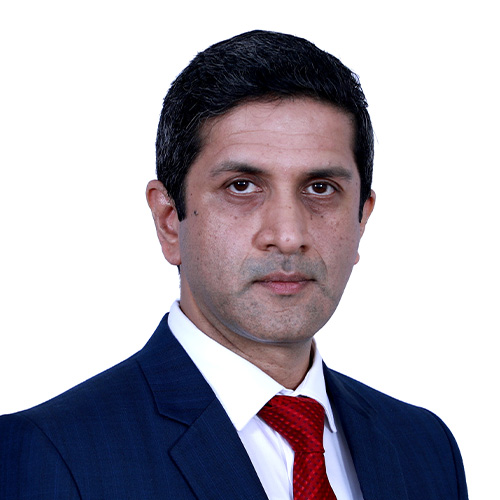
Baskar Ceri
MD NI-India & Global Business Manager for Aerospace, Defense & Government - BU
Baskar Ceri has more than 2 decades of experience across various Industries (Aerospace, Defense, Research, Automotive, Railways, Software Services, etc.) playing various roles starting from Engineering, Sales, Business Development, Operations to General Management.
Baskar started his career at NI in Austin, USA and was part of the 2-member team that started NI operations in India growing the team and the revenue to multi million dollars in India.
After his initial corporate role, Baskar founded an Engineering Services Company to provide Deep-Tech Engineering Solutions to Indian Defense, Space & Automotive companies and later founded a Knowledge Engineering Products company, the first Indian company to build products & systems that improve Safety & Efficiency of Railway Assets. Baskar has also been involved in several acquisitions & divestments during his experience & currently serves on the board of several companies and has keen interest in mentoring & building world changing companies. Baskar holds an Electrical & Electronics Engineering degree from BITS-Pilani, India and a Master’s in Electrical Engineering from Vanderbilt University, USA.
In his current role at NI, Baskar serves a dual role as Global Director of Business Development of ADG BU to build strategies and execute the business growth of the Aerospace & Defense Business across the globe with Regional Sales, and in India as Managing Director of NI-India, responsible for NI India growth and development.
Mahesh Basavaraju
Market Segment Manager, Wireless Communication Test and Measurement
Mahesh Basavaraju is a Market Segment Manager at Rohde & Schwarz, responsible for shaping and driving the market strategy for the Wireless Communication segment. In this role, he leads the development and implementation of product and go-to-market initiatives within the Test & Measurement division, with a focus on both cellular and non-cellular emerging technologies.
Mahesh represents the organization in multiple global standardization bodies. He currently serves as a delegate to the O-RAN Alliance and the Bharath 6G Alliance, and is in his second term as a member of the Technical Standards Advisory Committee (TSAC) in Singapore. He actively contributes to industry consensus building and participates in technical and strategic discussions shaping next-generation communication technologies.
With nearly two decades of experience in the telecom industry, Mahesh has worked across mobile device development, network infrastructure, and advanced wireless systems. His early career included a role as an R&D Engineer at Nokia, which formed the foundation of his deep technical expertise across the wireless ecosystem. His background enables him to bridge technology, business strategy, and industry direction effectively.
Mahesh frequently engages in technical conferences, industry panels, and workshops across the Asia-Pacific region, sharing insights into wireless trends, technology evolution, test strategies, and standardization.
He holds a Bachelor of Engineering degree in Electronics and Communication from Visvesvaraya Technological University, India.
Dr. Kamaljeet Singh
Semi-Conductor Laboratory, India
Dr. Kamaljeet Singh, M.Tech., Ph.D., joined the Indian Space Research Organisation (ISRO) in 1999 at the U.R. Rao Satellite Centre (URSC), where he spent over two decades making critical contributions to the India’s space program.
His tenure at ISRO was marked by the development of vital electronic components for space applications, including Geo-receiver systems, Hybrid Microcircuits (HMCs), MIC/MMIC circuits, and realization of indigenized components. During his tenure at URSC, he led the team of production, fabrication, quality and. contributed in major missions of ISRO. Many new initiatives and R&D activities culminated in import substitution of critical devices & technology. Furthermore, his specialized training in thin-film technology at SCL propelled his subsequent work in RF-MEMS and the initiation of indigenous sensor development projects.
Presently he is Director General of SCL and driving push for self-reliance in the semiconductor sector. Under his leadership, SCL has significantly enhanced the nation’s indigenous chip manufacturing capabilities apart from contributing significantly in skill development. Most notably, he oversaw the successful qualification of fully indigenous, aerospace-quality microprocessors like VIKRAM3201, Kalpana Chip, a landmark achievement realized in collaboration with ISRO using SCL’s 180 um CMOS technology node. Apart from various qualified ICs sensors, CCDs to strategic sectors, instrumental in taking new initiatives such as SoC, SiP developments, plastic packaging, new process development etc. Also initiated various collaborative work with start-up, academia, industry. Dr. Singh has authored over 250 technical articles, written 6 technical books, holding several patents and recipient of multiple Awards from prestigious institutions, including the Indian National Academy of Engineering (INAE), IETE, and ISRO, also holding Senior Membership of IEEE, Fellowship from IETE and the Punjab Academy of Sciences. He won Vikram Sarabhai Award from ISRO for the best technical books.
Grp Cpt. Prasanth B Nair
Astronaut, India
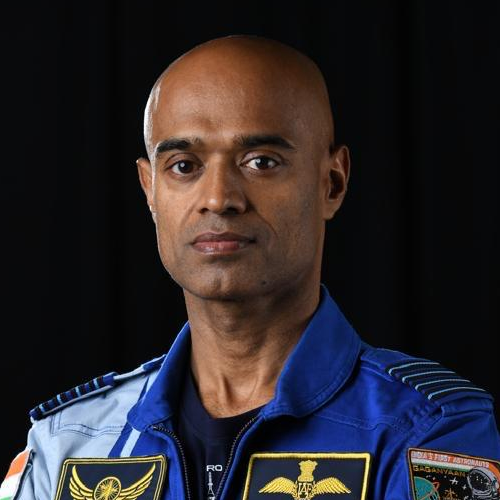
Air Commodore Prasanth Balakrishnan Nair is a fighter pilot with the Indian Air Force and goes by the fighter pilot callsign “PapaNair”. He has been the Commanding Officer of a front line Sukhoi 30 MKI fighter squadron of the Indian Air Force and has been awarded the nations second highest peacetime gallantry award, the Kirti Chakra by the President of India. He is presently an Astronaut, Gaganyaatri, with the Indian Space Research Organization (ISRO).
Air Commodore PB Nair is a graduate of 93rd course of the National Defence Academy, Pune and the 162nd Pilots Course of Air Force Academy, Dindigul, Hyderabad. He graduated top of his class and received the President’s Plaque and the Sword of Honor for standing first in the overall order of merit. He was commissioned into the IAF in 1998 and has worn the uniform for the last 27years. He has close to 3000 hours of flying experience on a variety of military fighter and transport aircraft, such as the MiG 21, Jaguar, MiG 29, Sukhoi 30 MKI, AN-32, HS-748, HJT-36, HPT-32, Iskra and Hawk.
He is a Category A Flying Instructor and has been a Directing Staff at the IAF Flying Instructors School.
He is a graduate of the Air Force Test Pilot School, Bangalore. In his capacity as an Experimental Test Pilot; he has been the recipient of AGNI excellence award by Defense Research & Development Organization (DRDO).
Air Commodore PB Nair has been a Directing Staff at the Defence Services Staff College (DSSC), Wellington. He is also a Distinguished Graduate of the US Air Force Air Command and Staff College (ACSC) in Montgomery, Alabama and graduated top of the international officers’ class in their Masters Degree program. He was the President of the International Officers body at the USAF Staff College. His research paper was selected for award and is published online by the Staff College.
He is a meritorious certificate holder in Advance Air Power from the Australian Air Power Development Centre, Australia He obtained his second Masters in Strategic Studies from Madras University and also completed his M Phil in Defense and Strategic Studies from the same university. His research paper on “Artificial Intelligence & War” has been published by Springer Publication. In July 2025, he received his M Tech (Research) in Aeronautics from the prestigious Indian Institute of Science (IISc), Bengaluru.
Air Commodore PB Nair is also a graduate of the prestigious Yuri Gagarin Cosmonaut Training Centre, Star City, Moscow from where he earned his qualification on the Soyuz Spacecraft. On 27 Feb 2024, The Honorable PM of India, Shri Narendra Modi pinned India’s Astronaut Wings on Group Captain Prasanth Balakrishnan Nair. As a back-up Astronaut in the Axiom 4 Mission to the International Space Station, he has trained with NASA, Space X, European Space Agency, and Japanese Space Agency.
He belongs to Palakkad, Kerala, where his parents are settled. He is married to Lenaa, who is an actress with the Indian Film Industry for the past 25 years. She is also a bestselling Penguin author. His daughter Nandini is a third year History & Political Science student.
Air Commodore PB Nair is an Open Water certified Scuba Diver and has also completed his advanced para gliding certification course.
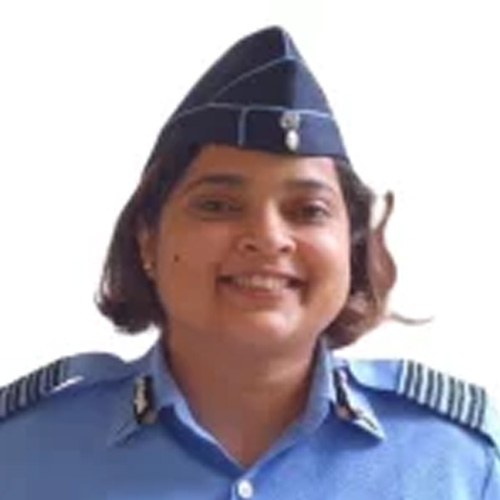
Gp Capt Stuti Mishra
Gp Capt Stuti Mishra is a graduate from the prestigious Armed Forces Medical College, Pune. The officer got commissioned in the Armed Forces in the year 2002. As a military doctor she has served in various field and peace locations in India. She completed her advance course in Aerospace Medicine in the year 2012 and is the recipient of esteemed President’s Gold Medal. She has also been awarded military commendations and appreciation for her impeccable professionalism by the Indian Army and the Indian Air Force. She has served as Flight Surgeon in various Squadrons and has been Head, Department of Acceleration Physiology and Spatial Orientation and Head, Department of Space Medicine at the Institute of Aerospace Medicine, Indian Air Force. As a part of the core team of Space Medicine specialists for the Gaganyaan Mission, she has been involved in Astronaut Selection and Aeromedical Training for Gaganyaan. She is also an Associate Editor of the Indian Journal of Aerospace Medicine. She has various national and international publications in the field of Aerospace Medicine to her credit and authored chapters in books. Her areas of interest include Acceleration Physiology, Human Factors and Space Medicine.
Gp Capt Punyashlok Biswal
Gp Capt Punyashlok Biswal is Head of Department of Space Medicine at the Institute of Aerospace Medicine, Bangalore. He is one of the pioneers spearheading the medical aspects of Human in Space Programme (Gaganyaan) in collaboration with ISRO. He was part of the team that selected the four Gaganyaan astronauts in 2019 and has been the Flight Surgeon to Gp Capt Shubhanshu Shukla during the Axiom 4 Mission in 2025.
An alumnus of the prestigious Armed Forces Medical College, did his MD in Aerospace Medicine from Institute of Aerospace Medicine, Bangalore. He has served as the Flight Surgeon of operational Army Aviation Squadrons and has been the SMO at 4 Wg, Agra before coming back to IAM as a post graduate teacher. At IAM he has headed the Dept of Human Engineering and now heads the Dept of Space Medicine.
An avid researcher, he has around 27 scientific publications under his belt. He holds a patent for an equipment to measure the Centre of Gravity of Aircrew Helmets. He is also the Principal Worker in development of the indigenous Psychological Test Battery called pSuMEDhA. His academic interests are in the field of Human Engineering and Human Factors, Ergonomics and Anthropometry, Biostatistics and Machine Learning and of course Space Medicine.
Presently, he is deeply involved in providing operational space medicine support to ISRO for the Indian Human Spaceflight Programme.
Wg Cdr (Dr) Polash Sannigrahi
Wg Cdr (Dr) Polash Sannigrahi graduated from M.R. Medical College, Gulbarga, Karnataka in 2011 and completed his MD in Aerospace Medicine from Institute of Aerospace Medicine (IAM), Indian Air Force, Bangalore in 2015.
He had served at a fighter base as Squadron Flight Surgeon, had an instructional tenure at IAM IAF and commanded No 1 Aeromedical Training Centre (AMTC).
He is also one of the designated Flight Surgeons for the Human Spaceflight Programme ‘Gaganyaan’. He underwent his training at European Astronaut Centre, Germany and Gagarin Cosmonaut Training Centre, Moscow, Russia.
He is an Associate Professor (Aerospace Medicine) at Rajiv Gandhi University of Health Science, Bangalore. He is an Associate Fellow of the reputed Indian Society of Aerospace Medicine (ISAM). He has presented papers in various conferences and published papers in national and international journals. His areas of interest include Space Medicine and Clinical Aviation Medicine. Presently, he is posted in Department of Space Medicine at IAM IAF.
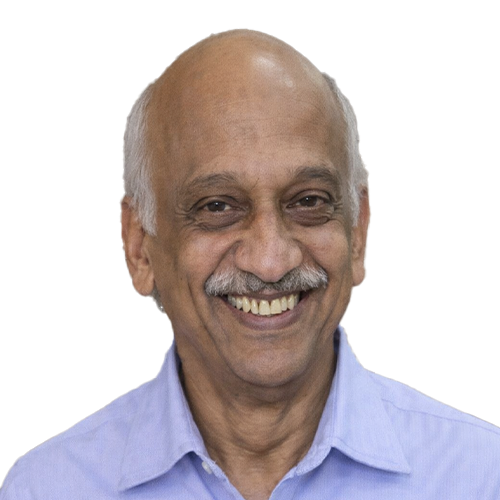
A. S. Kiran Kumar
Chairman, Physical Research Laboratory Management Council and Member, Space Commission, Govt of India.
Shri A. S. Kiran Kumar is Chairman, Physical Research Laboratory Management Council and Member, Space Commission, Govt of India.
He has served as Secretary, Department of Space and Chairman, Indian Space Research Organisation, during 2015-2018.
Shri Kiran Kumar, born on October 22, 1952 in Hassan, Karnataka, holds M.Sc. Degree in Physics (Electronics) from Bangalore University and M.Tech. Degree in Physical Engineering from Indian Institute of Science, Bangalore.
He has steered the implementation of the applications oriented Indian Space Programme, which has facilitated rapid development of the country in many important spheres of earth observation, communication, navigation, meteorology and space science, as well as the development of indigenous launch vehicles and related technologies for providing assured access to space. He has led design and development of more than 50 Electro-Optical Imaging Sensors flown on various Space borne platforms starting from Bhaskara in 1979. Further, his role in the success of Chandrayaan missions and Mars Orbiter Mission has been significant.
Shri Kiran Kumar has been the Chair of the Committee on Earth Observation Satellites (CEOS) in 2012. He has made valuable contributions to Coordination Group of Meteorological Satellites (CGMS), Expert Team on Satellite Systems – World Meteorological Organisation (ETSAT of WMO) and Indo-US Joint Working Group on Civil Space Cooperation.
Shri Kiran Kumar has been the President, Aeronautical Society of India. He is Fellow of Indian National Academy of Engineering, National Academy of Sciences India, Indian Society of Remote Sensing, Institution of Electronics & Telecommunications Engineers, Indian Society of Systems for Science & Engineering, Indian Meteorological Society, Indian Society of Geomatics, Gujarat Science Academy, Andhra Pradesh Akademi of Sciences and an elected member of International Academy of Astronautics. He has been conferred with Honoris Causa and DSc by 18 Indian academic institutions.
Gp Capt Angad Pratap
Savyasachi Srinivas (Savya)
Savyasachi Srinivas (Savya)
Vice President, Global Engineering & Technology Centres, Collins Aerospace, India, Poland, and Puerto Rico
Savyasachi Srinivas (Savya) is the Vice President of Global Engineering & Technology Centres (GETC) at Collins Aerospace, leading operations across India, Poland, and Puerto Rico. GETC is home to over 4,000 engineers and plays a pivotal role in advancing Collins Aerospace’s innovation agenda globally.
In his current role, Savya is part of the Enterprise Engineering organisation and is responsible for the overall strategy, growth, and delivery of global engineering centres. His teams provide critical engineering support across all Collins Aerospace Strategic Business Units (SBUs), driving execution of both commercial and military programs for customers worldwide.
Savya brings over two decades of global aerospace and defence experience across the United States and India. He has led cross-functional, geographically distributed teams to develop and deliver large-scale, mission-critical systems in aerospace, aviation, and defence domains.
He began his career at Lockheed Martin in the U.S. as a Systems Engineer, where he advanced into leadership roles overseeing functional and program teams for air traffic management systems and mission-critical platforms. He then moved to Thales India as Director of Engineering, supporting programs in avionics, cabin systems, air traffic management, and IT.
In 2013, Savya joined Rockwell Collins as Director of the India Design Centre, later serving as Senior Director of Asia Pacific Engineering, where he led engineering sites in India, Australia, and Singapore. Most recently, he served as Executive Director for GETC India, before taking on his current global leadership role.
A passionate advocate for innovation and capability development, Savya is focused on building an environment that fosters collaboration, technical excellence, and sustainable value creation for the enterprise.
Savya holds a Bachelor’s degree in Mechanical Engineering from Bangalore University, a Master’s in Industrial Engineering from the University of Arizona, and a Master’s in Technical Management from Johns Hopkins University.
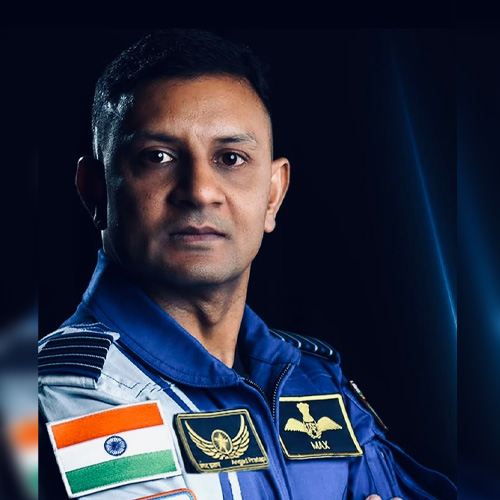
Gp Capt Angad Pratap
Astronaut, India
Group Captain Angad Pratap has flown the Mig-21 Bison and the Sukhoi-30 aircraft. He is a Flying Instructor and an Experimental Test Pilot. He has trained India’s first batch of female fighter pilots. He was a part of the Brahmos-Air Version Missile first test launch, has test fired India’s first Anti-Radiation Missile, the Rudram-1 and has participated in multiple DRDO indigenous weapon trials & Electronic Warfare in-flight experiments.
He has trained for 14 months at GCTC, Moscow and 21-months at the Astronaut Training Facility in India. He has 2300 hours across 19 different types of aircraft & has completed 6 different types of survival trainings in India and abroad.
He has a keen interest in Physics & Aerodynamics. He is an “IRONMAN”, having completed the Full Ironman Triathlon 2023 at Subic Bay, Philippines with a continuous 4 km ocean swim plus a 180 km cycle plus a full 42 km Marathon run. He is a trained skydiver, a certified Level-4 Scuba Diver, has completed a 100 km Ultra Marathon and has a 7 km non-stop swim to his credit. He is an advanced level mountaineer. and is presently pursuing an M Tech (by research) from IISc, Bengaluru.
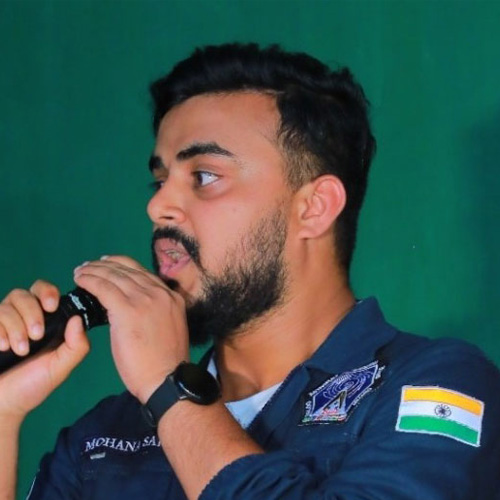
Mohana Sai Akula
Mohana Sai Akula
Astrobiologist
Mohana Sai Akula is an astrobiologist and analog astronaut specializing in space biology, astrobotany, hydroponics, bioregenerative life support systems, and the design and commissioning of analog astronaut missions and habitats. He holds a Master’s degree in Astrobiology & Space Science from Amity University Mumbai.
Mohana was one of three selected crew members for Mission ANUGAMI, India’s first government-supported space analog mission conducted in the context of the Gaganyaan Analog Experiment.
He has also participated in international analog astronaut missions in Poland, Astronaut readiness trainings in Arizona, USA, contributing to research in astrobiology, crew operations, human factors, and sustainable life support systems.
His work focuses on developing mission architectures and biological systems that enable long-duration human exploration of the Moon and Mars.
He previously served as Project Scientist-I at the Centre for Advance Research in Space, Institute of Aerospace Medicine, contributing to research under an ICMR-funded project.
2022–2025 Secretary, DoS & Chairman ISRO
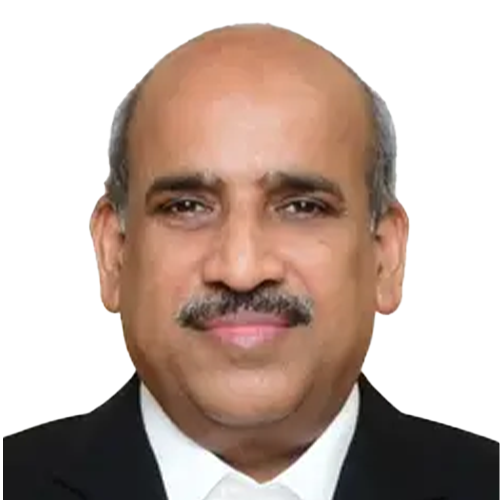
Dr. S Somanath
2022–2025 Secretary, DoS & Chairman ISRO
Dr. Sreedhara Panicker Somanath served as a Distinguished Scientist (Apex) and Secretary, Department of Space and Chairman, ISRO till January 2025. Dr. S. Somanath, having a career spanning nearly 40 years, is an expert in the field of space technology and systems engineering of launch vehicles, and has made significant contributions. Presently he serves as the Prof. Vikram Sarabhai Professor at ISRO, Distinguished visiting professor at IISc, Bangalore, Chancellor of Chanakya University, Bangalore and an Advisor to State Government of Andhara Pradesh.
As Secretary of DoS, he had piloted the National Space Policy, engagement of ISRO with private space initiatives and start-ups in space sector. Under his leadership mission Chandrayaan-3 landing near the south pole of the Moon was accomplished. Notable missions during his tenure include Aditya-L1, XpoSat, INSAT-3DS, NVS-01, Oceansat, GSAT-24, SpaDeX & LVM3-OneWeb missions. Under his leadership Small Satellite Launch Vehicle and Test Vehicle were developed and landing experiments of the Re-usable Launch Vehicle (RLV-LEX) were conducted. He played a key role in the architecture of Gaganyaan and accomplished the first mission abort demonstration. He was instrumental in developing the ‘Space Vision-2047’, where Gaganyaan expansion program, Chandrayaan series and other exploration missions, Bharatiya Antariksha Station development and human mission to Moon, new launch pads were approved by government.
He was the Director of Vikram Sarabhai Space Centre (VSSC) during 2018-21 and the Director of Liquid Propulsion Systems Centre (LPSC) during 2015-18. He was System Engineer and the Project Director of LVM3-X/CARE mission which was successfully accomplished in December, 2014.
Dr. S. Somanath took his B. Tech in Mechanical Engineering from TKM College of Engineering, Kollam with a university rank, Masters in Aerospace Engineering from IISc, Bangalore with gold medal and PhD from IITM Chennai. He has been bestowed with Honorary Doctorates from 18 universities.
He is a Fellow of Indian National Academy of Engineering (INAE), Indian National Academy of Science (INSA), Aeronautical Society of India (AeSI), Astronautical Society of India (ASI), US National Academy of Engineers (US-NAE) and a member of International Academy of Astronautics (IAA). He is the President (Elect) of AeSI and President of Society of Aerospace Quality and Reliability (SAQR). He received ‘Hall of Fame’ award from International Astronautics Federation (IAF), Von-Karman award from International Academy of Astronautics (IAA), National Aeronautics Prize from AeSI, Space gold medal from ASI, Distinguished alumni award of IISc, Bangalore and IIT Madras, distinguished fellow award from IIT Kanpur, Karnataka Rajyotsava award, Kerala Prabha and Kerala Sasthra Puraskaram.
He has published papers in journals and conferences in structural dynamics and control, materials modelling, dynamic analysis of separation mechanisms, vibration and acoustic testing, launch vehicle design and launch services management. Dr. S. Somanath has widely travelled and visited across most global space agencies and facilities, has been a delegate to UN-COPUOS, vice President of International Astronautical Federation (IAF) and participated in International Astronautical Congress (IAC) held at different countries.
Dr. Radhakant Padhi
Professor, Dept. of Aerospace Engineering, Indian Institute of Science, Bangalore
Dr. Radhakant Padhi is currently working as a Professor (HAG scale) and the Satish Dhawan Chair in the Department of Aerospace engineering, and as an Associate Faculty at the Centre for Cyber-Physical Systems, Indian Institute of Science (IISc), Bangalore.
Prof. Padhi’s research interests include optimal and nonlinear control synthesis algorithms and their applications to challenging practical problems, mainly in aerospace and biomedical engineering. His research is well-supported by MoE, DRDO, ISRO, DBT, and a few tech-driven foundations and private companies. He has co-authored approximately 300 publications in peer-reviewed international journals and conferences, and also two books – one on Satellite Formation Flying (in 2021) and another on Intelligent Adaptive Control with System Constraints (in 2026). Yet another book on Applied Optimal Control and State Estimation is also being finalized.
Prof. Padhi is a Fellow of Indian National Academy of Engineering (INAE) of India, Aeronautical Society of India (AeSI), Astronautical Society of India (ASI), and a few other societies. He is the Director of Operations of the Automatic Control and Dynamic Optimization Society of India and has been a past president of it too. He is an Associate Editor of the international journal “Unmanned Systems”. He is a member of technical review committees for several missions of ISRO and DRDO.
His recent passion is his two deep-tech startups incubated in IISc, one focusing on Advanced Guidance and Control of aerospace vehicles for challenging missions and the other focusing on diabetes care. Through these, he intends to focus utilizing his knowledge and experience on the benefit of the country and mankind.
Air Traffic Model for Airspace (ATMA) of India
Rapid growth in the air-traffic over Indian airspace is slowly becoming quite overwhelming for the existing Air Traffic Control (ATC) system to handle. Optimal, intelligent and predictive decision-making technology needs to be developed to automate the process as much as possible. The first step in this direction is to have a reliable air-traffic flow model for all commercial flights, so that the traffic density in future time can be predicted and appropriate decisions can be taken well ahead of time. Keeping this in mind, an Air Traffic Model over Airspace (ATMA) of India is being created in IISc Bangalore. The model includes kinematics of flights, supported by several databases and procedures such as airport locations and runway orientations, SID/STAR procedures during takeoff and landing, flight schedule, flight routes, performance characteristics of aircraft, wind profile data, and so on. This talk will give an overview of the ATMA of India model.
Dr. Swati Mohan
Project Manager, AstroNav
Swati was born in Bengaluru India, and emigrated to the United States of America when she was one years old. Swati attended Cornell University and received her B.S. in 2004 in Mechanical and Aerospace Engineering. After a brief stint working at NASA Jet Propulsion Laboratory on the Cassini mission, in 2004-2005, she went on to graduate school at Massachusetts Institute of Technology in the Aeronautics/Astronautics department. She re-joined NASA’s Jet Propulsion Laboratory in 2010 in the Guidance, Navigation, and Controls section. Since then, Swati has worked on a number of missions, such as GRAIL, OCO-3, Mars 2020 Perseverance, and Psyche. She is best known for being the voice of Entry, Descent, and Landing for Perseverance’s landing on February 18, 2021. She was the GNC lead and a Chief Engineer for the Psyche mission, which launched on October 13, 2023. After launching Psyche, Swati transitioned to the Mars Sample Return mission. She first served as Chief Engineer for the Mars Launch System, then later the Descent Command and Control Lead. She is currently the Project Manager for AstroNav, an autonomous celestial navigation payload.
Dr. Ch. V. N. Rao
Distinguished Scientist & Associate Director (R&D), Space Applications Centre (SAC), ISRO
Dr. Ch. V. N. Rao joined the Space Applications Centre (SAC), ISRO, in 1989 after completing his Bachelor’s degree in Electronics and Communication Engineering. Over the past three and a half decades, he has played a pivotal role in the development of microwave remote sensing payloads for India’s Earth observation and planetary missions and has been one of the principal architects of ISRO’s microwave sensing programme.
Dr. Rao has been the lead designer and key contributor in the realization of numerous state-of-the-art microwave payloads, including C-band Synthetic Aperture Radars (SAR) for RISAT-1, EOS-04 and EOS-09; Ku-band Scatterometers for Oceansat-2, SCATSAT-1, EOS-06 (Oceansat-3) and Oceansat-3A; RISAT-2B series payloads; Ka-band Altimeters for Chandrayaan-2 and Chandrayaan-3; and the landmark NASA-ISRO Synthetic Aperture Radar (NISAR) mission. His contributions have been instrumental in establishing India’s indigenous capabilities in advanced microwave remote sensing technologies.
As a visionary technologist and team leader, Dr. Rao has successfully led multidisciplinary teams in developing complex and cutting-edge payloads, including India’s first SweepSAR-based S-band SAR for the NISAR mission. He has made significant contributions to indigenous technology development, strategic self-reliance, and successful technology transfer to Indian industries for the production of flight-qualified hardware.
Dr. Rao completed his Ph.D. from Dhirubhai Ambani Institute of Information and Communication Technology (DA-IICT), Gandhinagar, in 2019. His research contributions are reflected in over 150 peer-reviewed publications, more than 500 citations, and six patents.
He is a Member of the International Academy of Astronautics (IAA), a Senior Member of IEEE, and a Life Member of the Astronautical Society of India (ASI), Indian Society of Remote Sensing (ISRS), and Indian Society of Systems for Science and Engineering (ISSE).
Presently, Dr. Rao serves as Distinguished Scientist and Associate Director (Research & Development) at SAC, ISRO, where he provides strategic leadership for advanced research and technology development in microwave remote sensing, satellite communications, navigation systems, quantum technologies, terahertz technologies, and airborne as well as spaceborne sensing systems. Under his guidance, SAC continues to advance cutting-edge technologies that strengthen India’s capabilities in space science, Earth observation, communication, and strategic applications.
Throughout his illustrious career, Dr. Rao has demonstrated exceptional technical leadership, innovation, and commitment to excellence. His pioneering contributions have significantly strengthened India’s capabilities in microwave remote sensing, Earth observation, planetary exploration, and strategic space technologies. He is widely recognized for nurturing teams, promoting industry participation, and advancing novel technologies, including innovative microwave resonator-based accelerometer systems.
Dr. Rao’s distinguished contributions have left an enduring impact on ISRO’s remote sensing programme and continue to inspire the next generation of scientists and engineers.
RF Technologies for Microwave / mm-wave /sub-mm-wave Sensors for Space Applications
Microwave Remote sensing data has been employed for multitude of critical applications like National natural resources assessment, cyclogenesis, crop acreage and forecast, assimilating in to Numerical weather prediction etc. This has the advantage of all weather data collection, cloud penetration capability vis-à-vis the Optical remote sensing, which has been the most widely used method. ISRO has been having a structured Microwave Remote sensing program catering to the national needs, which has resulted in indigenously developing technologies and techniques on-par with other developed nations. Building these Sensors like Synthetic Aperture Radars, Scatterometers, Altimeters, Sounders, Radiometers, Ground Penetrating Radars etc. calls for various state-of the art developments in low power as well as high power technologies covering frequency ranges from UHF to sub-mm wave.
The talk covers the broad sensors concepts and the various RF technologies being employed in Indian Microwave Remote sensing systems, which also supported the historic Moon Landing by India.
Agility Over Advantage: Space, Security, and the Asymmetry Trap
As space and defence converge into a single, resource-constrained strategic domain, nations face an uncomfortable truth: technology superiority alone no longer guarantees security or mission success. Asymmetric threats, compressed innovation cycles, and the concurrent demands of national development are rewriting the rules of engagement: in orbit and on the ground.
Compounding this challenge is a structural paradox: the rate of technology evolution now consistently outpaces the speed of system design and realization, creating a widening gap where every fielded solution risks obsolescence before operational maturity: A progressive asymmetry that favors the nimble disruptor over the established power. Cyber-physical systems are responding to this pressure through a decisive architectural shift: from hardware-centric philosophy toward software-first agility, progressively becoming software-defined and ultimately software-dominated platforms where capability refresh, mission adaptation, and threat response are delivered through code rather than re-engineering.
This talk examines how Digital Engineering, Artificial Intelligence, and autonomous systems can deliver meaningful capability gains without the unaffordable promise of a clean-slate restart. Through a pragmatist’s lens, anchored in India’s space and defence imperatives and informed by global experience, it proposes an Agility-First, Build-to-Last Architecture for navigating Zero-Margin-of-Error Missions in an era of abundant aspirations and finite resources.
Aniruddha Mukhopadhyay
Fellow, Lead Chief Technologist, Synopsys Inc. Pittsburgh, USA
Aniruddha Mukhopadhyay serves as the Lead Chief Technologist at Synopsys, Inc., headquartered in Sunnyvale, USA. In this capacity, he provides strategic counsel to senior executives across global enterprises on technologies pertaining to digital engineering initiatives. His domain of expertise encompasses model-based engineering, open collaborative ecosystems, software-defined systems, and AI/ML-driven analytical frameworks for data-informed decision-making. Holding a Ph.D. in Mechanical Engineering and possessing several decades of distinguished professional experience, Aniruddha is recognized as a subject matter authority in the Automotive, Aerospace, Defense, and High-Technology sectors. His present responsibilities center on the formulation and execution of technology adoption strategies designed to accelerate product design and validation, thereby enabling continuous design iteration across global supply chains and R&D organizations. In addition, Aniruddha leads a dedicated R&D team based in Pune, India, focused on the automated synthesis of cyber-physical systems and mission architectures, virtualization, IT-OT integration frameworks, and the deployment of embedded digital twins at the edge.