July 19, 2026 • 4 hours
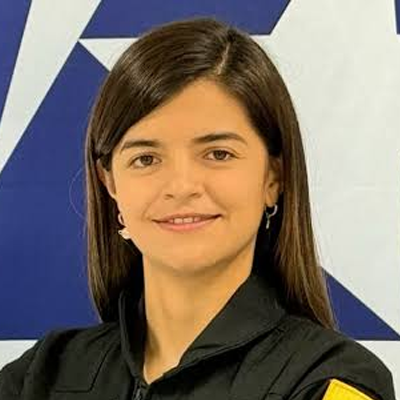
Analog Astronaut & STEM Lead, Scientific Corporation of the Aerospace Sector (COCSA), Coulambia
Format: Lectures + group workshops + simulations
Participants: Whole group + parallel small groups
Facilities: Large conference hall + 2 workshop rooms
09:00–09:30 Opening Session – Human in Space
Topic: Human Spaceflight Medicine: From Gagarin to Mars Missions
Content:
Learning goals:
09:30–10:15 Lecture – Space Physiology Fundamentals
Topic: How Microgravity Changes the Human Body
Content:
10:15–10:30 Coffee Break
10:30–11:30 Workshop – Mental Health in Extreme Environments
Topic A: Psychological Health in Isolation
Content:
Exercise:
Mission conflict simulation scenario
Topic B: Telemedicine and Autonomous Medical Systems
Content:
Exercise:
Design a Mars mission medical kit
11:30–12:30 Group Simulation – Elements of Astronaut Selection
Topic: Be like an Astronaut – Competition
Scenario-based exercise:
Participants must:
Skills developed:
The winner will donn the real spacesuit at the end of the workshop
12:30–13:30 Lunch Break
13:30–14:30 Workshop – Systems Engineering for Human Spaceflight Missions
Topic: Why Systems Engineering Matters in Human Spaceflight
Content
14:30–15:30 Human safety in space
Topic: Human Spaceflight as a System-of-Systems
Human Spacecraft = System of Systems
Interfaces between: humans, environment, technology
Mini Activity (5 min)
What happens if thermal control fails but life support works?
Discussion goal: interdependency of subsystems.
15:30–15:45 Coffee Break
15:45–16:15 – Life Support Systems (ECLSS)
Topic: Human-Centered Systems
Content:
Environmental Control and Life Support Systems:
Closed-loop vs open-loop systems
Examples:
Key Insight
Life support is not one device — it’s a network of interacting processes.
16:15–17:05 – Group Activity — Astronaut Data Analysis
Topic: Astronaut Health Monitoring
Content:
Participants analyze:
Tools:
17:05–18:00 Team Challenge — Mars Habitat Survival System
Scenario: Design a minimal human survival system for a 4-person Mars habitat operating for 30 days
Participants are divided into small groups (3–5 people).
Task Requirements
Each group must define:
Constraints
Template (Give to Groups)
Mission Goal:
Top 5 Requirements:
1.
2.
3.
4.
5.
Subsystems Needed:
Major Risks:
Expected Learning Outcomes
18:00–19:00 Wrap-up Session, Presenatation of the space suit, certificates for participants
Summary topics:
Demonstration of the space suit.
Certification and group photos
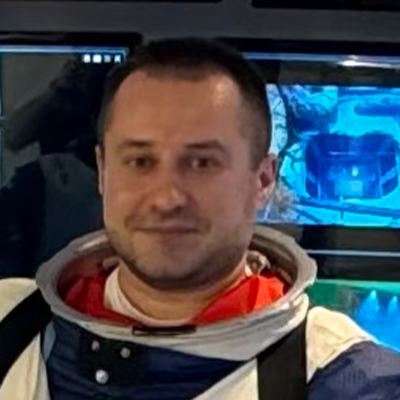
CEO, Analog Astronaut Training Center, Poland
CEO of AATC, Astrotech, and Micropura; director of the project OTTER (Orbital Technologies and Tools for Extravehicular Research) for the International Institute for Astronautical Sciences; and lead instructor in neutral buoyancy and underwater EVA training and scientific diving, with prior roles at European Space Agency and major public and private institutions, over 100 organizations consulted, and 32k+ people trained in aerospace, software and marine engineering. Holds an M.Sc. in Aerospace Engineering from Polish Air Force Academy, BSc in Software Engineering and multiple postgraduate diplomas (Extreme Medicine, Geophysics, Analytical Chemistry, Radiobiology and Air Space Management), currently pursuing a PhD on underwater habitats at Polish Naval Academy. Recipient of the Copernicus Medal for creating foundations for human-spaceflight in Poland. CCR and cave diver, highly certified technical trimix diving instructor across multiple agencies, with additional training in aviation, combat medicine, and astronautics. Leads development of HabitatOS, co-designed advanced pressurized spacesuits and underwater systems, and conducted centrifuge and high-altitude testing for human subject in spacesuits for ascent and re-entry profiles. Experienced analog astronaut, ESA collaborator, and parabolic flight participant. Author of several books spanning AI, software engineering, astronaut training, and geophysics. DAN and EFR emergency medicine instructor. ACLS and CPR microgravity procedures researcher.
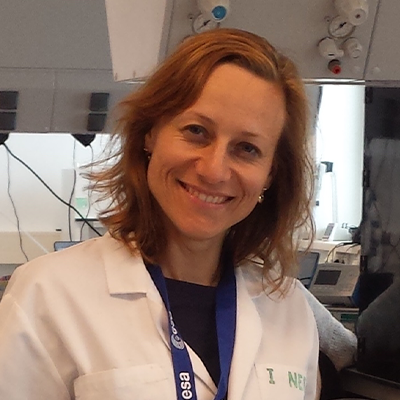
Director of Scientific Projects, Analog Astronaut Training Center, Poland
Agata is a neuroscientist, astrobiologist, and innovator. Both her M.Sc. thesis at Jagiellonian University in Cracow and PhD thesis at Stockholm University focused on the influence of light on signal transformation in neurochemical circuits of nervous systems in various animal species. She discovered an internal eyelid in the insect’s compound eye and presented this discovery in the Concurrent Design Facility at the European Space Agency, aiming to revolutionize the construction of future modular space telescopes.
After completing her PhD, she worked as a postdoc on the neurobiological mechanisms of aggression at Jagiellonian University, and later secured a position in biomimetics at the European Space Agency in the Advanced Concepts Team. There, she developed a prototype lighting system to synchronize biological clocks and provide non-invasive treatment for jet lags. While abroad, she started various projects in Poland. These include organizing international “Meet the Space” conferences, founding Europe’s first Analog Space Research Station named Lunares, and conducting lunar and Martian analog simulations with specific scientific projects on board.
Her particular interest lies in time architecture, especially time illusions in isolated areas. Additionally, Agata works on photosynthetic biomaterials and aquaponic systems to initiate reliable and sustainable terraforming processes in isolated spaces.
Recently, together with collaborators, she developed a new method for in-situ clothes production in space. Agata is a multiple award winner, including the best scientific experiment in the Global Space Balloon Challenge for detecting stress in biological organisms in the stratosphere, the scientific Rojszczak Award, a Golden medal for the initiative of creating the first habitat in Poland, and even public recognition as “One of the most powerful women in Poland.” She was a co-founder of Space Garden Company and Chairman of Lunares Scientific Council.
Agata is a Board Member of the World Research Centre and Director of Advanced Concepts at the private space agency The Valles Marineris.
Currently, she is focused on accelerating human spaceflight research worldwide
This tutorial session will be approximately 4 hours in duration. The workshop is structured into a single session comprising multiple key topics: Numerical methods for trajectory planning, optimal feedback control, optimal stochastic control and adaptive control. The first major talk, Numerical Methods for Trajectory Planning, will cover fundamental aspects of the indirect optimal control and state-of-the-art methods for solving two-point boundary value problems. This will be followed by Dynamic System Theory for Optimal Feedback Control, which will focus on the connections between dynamical system theory and optimal feedback control while leveraging the Hamilton Jacobi theory to solve for optimal control policy. The third talk, Adaptive Control will address key methodologies for control under parametric and non-parametric uncertainty. The session will conclude with a discussion segment, allowing participants to engage with the speakers, ask questions, and explore practical implications of the presented topics.

Contact:
Mohit Kumar
M: +91 74286 93369
E: mohit@cimglobal.net
ieeespace2027@gmail.com
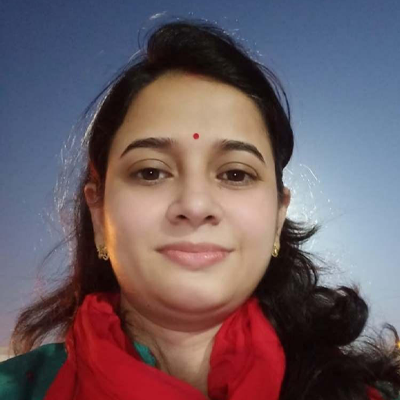
Apeejay Stya University
Haryana, India
Analog Astronaut & STEM Lead, Scientific Corporation of the Aerospace Sector (COCSA), Coulambia
Giovanna Estefania Ramírez Ruiz received her professional degree in Electronic Engineering, as well as a Master’s Degree in Development and Integral Project Management. She is also a certified aviation pilot and analog astronaut recognized by training and research centers in Poland. She has completed numerous aerospace training programs in various countries. Currently, she leads STEM projects at the Scientific Corporation of the Aerospace Sector (COCSA). She was also a professor in the master’s program in aerospace engineering at San Buenaventura University and the Colombian School of Engineering Julio Garavito.
Past president of the professional chapter Aerospace & Electronic Systems Society- AESS Colombia section (2019-2021); Former fellow of the Japan Global Space consortium, Researcher and developer of a space mission through a HeptaSat-satellite. She has worked in the Directorate of Science, Technology and Innovation and in the Postgraduate School of the Colombian Air Force.
She has been involved in several national and international research projects in cooperation with IEEE (Institute of Electrical and Electronics Engineers), UNISEC (University Space Engineering) and the Colombian Air Force.
She has recognitions such as: the International “Ten Outstanding Young People” JCI Award 2024; “Successful Women Award Colombia 2020” in the Science and Technology category, Best Young professional IEEE 2019. Entrepreneur of the year 2018 ‘with the JULIO GARAVITO award’, and Author of the “Genius Pamper” invention. Recognized as Young Promise Under 30 by COLPARMEX, and selected as Recipient of the International Galileo Chair by COLPARMEX.
CEO, Analog Astronaut Training Center, Poland
CEO of AATC, Astrotech, and Micropura; director of the project OTTER (Orbital Technologies and Tools for Extravehicular Research) for the International Institute for Astronautical Sciences; and lead instructor in neutral buoyancy and underwater EVA training and scientific diving, with prior roles at European Space Agency and major public and private institutions, over 100 organizations consulted, and 32k+ people trained in aerospace, software and marine engineering. Holds an M.Sc. in Aerospace Engineering from Polish Air Force Academy, BSc in Software Engineering and multiple postgraduate diplomas (Extreme Medicine, Geophysics, Analytical Chemistry, Radiobiology and Air Space Management), currently pursuing a PhD on underwater habitats at Polish Naval Academy. Recipient of the Copernicus Medal for creating foundations for human-spaceflight in Poland. CCR and cave diver, highly certified technical trimix diving instructor across multiple agencies, with additional training in aviation, combat medicine, and astronautics. Leads development of HabitatOS, co-designed advanced pressurized spacesuits and underwater systems, and conducted centrifuge and high-altitude testing for human subject in spacesuits for ascent and re-entry profiles. Experienced analog astronaut, ESA collaborator, and parabolic flight participant. Author of several books spanning AI, software engineering, astronaut training, and geophysics. DAN and EFR emergency medicine instructor. ACLS and CPR microgravity procedures researcher.
Director of Scientific Projects, Analog Astronaut Training Center, Poland
Agata is a neuroscientist, astrobiologist, and innovator. Both her M.Sc. thesis at Jagiellonian University in Cracow and PhD thesis at Stockholm University focused on the influence of light on signal transformation in neurochemical circuits of nervous systems in various animal species. She discovered an internal eyelid in the insect’s compound eye and presented this discovery in the Concurrent Design Facility at the European Space Agency, aiming to revolutionize the construction of future modular space telescopes.
After completing her PhD, she worked as a postdoc on the neurobiological mechanisms of aggression at Jagiellonian University, and later secured a position in biomimetics at the European Space Agency in the Advanced Concepts Team. There, she developed a prototype lighting system to synchronize biological clocks and provide non-invasive treatment for jet lags. While abroad, she started various projects in Poland. These include organizing international “Meet the Space” conferences, founding Europe’s first Analog Space Research Station named Lunares, and conducting lunar and Martian analog simulations with specific scientific projects on board.
Her particular interest lies in time architecture, especially time illusions in isolated areas. Additionally, Agata works on photosynthetic biomaterials and aquaponic systems to initiate reliable and sustainable terraforming processes in isolated spaces.
Recently, together with collaborators, she developed a new method for in-situ clothes production in space. Agata is a multiple award winner, including the best scientific experiment in the Global Space Balloon Challenge for detecting stress in biological organisms in the stratosphere, the scientific Rojszczak Award, a Golden medal for the initiative of creating the first habitat in Poland, and even public recognition as “One of the most powerful women in Poland.” She was a co-founder of Space Garden Company and Chairman of Lunares Scientific Council.
Agata is a Board Member of the World Research Centre and Director of Advanced Concepts at the private space agency The Valles Marineris.
Currently, she is focused on accelerating human spaceflight research worldwide