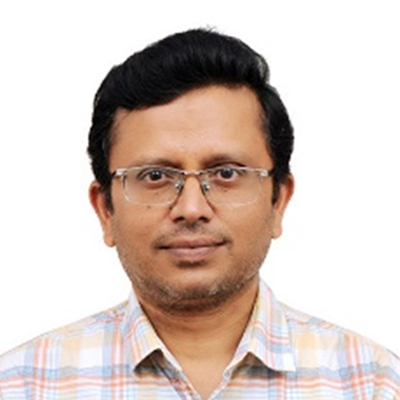
Chief scientist & Group Head, System Identification and Data Fusion group
Deputy Head, Flight mechanics and control division of CSIR-NAL, Bangalore
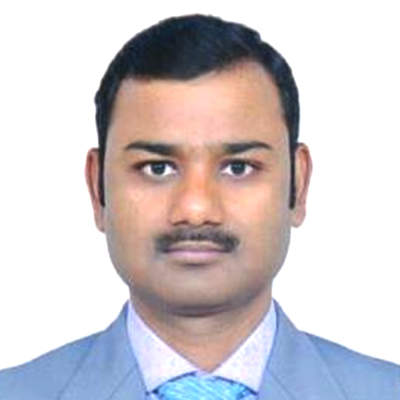
Senior Principal Scientist
CEM, CSIR-NAL
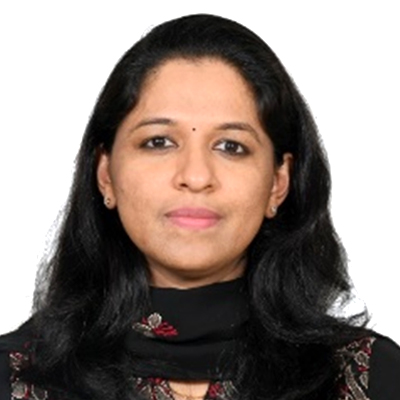
Principal Scientist
CEM, CSIR-NAL
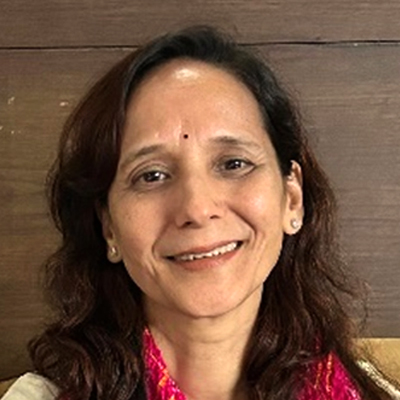
Chief Scientist CSIR-NAL
Group Head, Safety Critical Embedded Software Group Head
Professor, AcSIR (Academy of Scientific and Innovative Research)
Multi Sensor Datafusion (MSD) for Fifth Generation Aircraft (Speaker: Dr Sudesh Kashyap and Sanketh Ailneni)
Multi-sensor data fusion (MSDF) combines inputs from different on-board sensors (such as Radar, IRST, MAWS, RWR) and Datalink into a single, clear picture, which improves situational awareness and helps pilots understand the threat more effectively. It enhances target detection and tracking accuracy, reduces pilot workload by simplifying complex information, and increases reliability by cross-verifying data from multiple sources. Additionally, it improves survivability by enabling quicker threat detection and response, while also supporting better coordination with other aircraft and systems. MSDF is essentially a must-have for 5th and 6th generation fighter aircraft.
Presently MSDF is implemented on F-35, Rafale, Su-30 fighter aircraft. The MSDF technology used in these aircraft is not available either offline or online. So there is a need to develop such technology for our modern fighter aircraft such as LCA-Mk2 and AMCA.
In CSIR-NAL, various work on design and development of MSDF for LCA Mk2 and AMCA is under progress with following objectives to be made:
Frequency Selective Surfaces for Aerospace Applications: Radome, Antennas, and RAS (Speaker: Dr Shiv Narayan )
Frequency selective surface is a two dimensional passive array which shows filter characteristics for Electromagnetics wave impinging on its surface. Due to its spatial filter characteristics, FSS is widely used for aerospace applications such as antennas, radomes, and RAS. FSS is basically used in the design of antenna and radome to enhance their EM performance within the specified band and out-of-band RCS reduction. It is also used to design thin and broadband radar absorbing structures (RAS). In order to design FSS-based antennas, radomes, and RAS, it is essential to understand the fundamentals of FSS structure and its EM design methodologies for a particular application. In view of this, the present talk includes the fundamentals of FSS structures followed by its detailed applications to radomes, antenna, and RAS.
Generative AI for the Design of Metasurfaces (Speaker: Mrs. Vineetha Joy)
The design of metasurfaces traditionally relies on computationally intensive full-wave simulations and iterative optimization, limiting scalability and speed. This talk presents generative AI approaches for direct synthesis of meta-atom geometries from desired electromagnetic responses. Physics-aware strategies integrating surrogate electromagnetic models to ensure accurate and physically consistent designs will be highlighted. Key challenges such as one-to-many mappings, dataset imbalance, and conditional fidelity will also be discussed. Experimental validation through fabrication and measurements demonstrates that these methods enable rapid, high-fidelity metasurface design, reducing turnaround time from months to seconds.
Model-Based Safety Analysis Certification Framework (Speaker: Dr Manju Nanda)
The presentation will talk model-based safety framework which enables the designers, certification agency and safety engineers an effective approach to capture, implement and validate safety features of an airborne system.
Techniques such as STPA, software safety assessment and the test case generation using AI techniques will be discussed.
Further the certification approach will be mapped to the framework.
Dr Sudesh Kumar Kashyap is presently working as a Chief scientist, Group Head of System Identification and Data Fusion group and Deputy Head at Flight mechanics and control division of CSIR-NAL, Bangalore. He has done his BE in Electronics, ME in Electrical and PhD in Electrical & Electronics.
He was key member of various projects sponsored by different DRDO labs for the design, development and evaluation of advanced algorithms for Multisensor Multitarget tracking and fusion for Air defence applications such as Real Time Flight Safety Expert System (RTFLEX) and RF Seekers based tracking of homing target. His core expertise is in the area of Kalman filtering, Multisensor data fusion, gating and data association and tracking of targets with evasive maneuvers. He has also contributed to develop a concept proving Fuzzy-Bayesian based expert system to assist the pilot by providing enhanced situational awareness and threat levels in Beyond visual range (BVR) air-to-air combat scenarios.
His other important contribution is a consistent effort for a decade towards the development of Enhanced and Synthetic Vision System (ESVS) for the regional transport aircraft (RTA). This vision based technology provides enhanced situational awareness of external world to pilot perspective in poor or degraded visual environment such as fog during taxi, take-off and landing operations. He has developed a ground based facility “ESVS Flight Simulator” to carry out research on ESVS and evaluation of flight data. His other contributions are INS-GPS fusion for attitude estimation of UAVs, development of symbology for Head-up display for RTA, trajectory estimation of stores of fighter aircraft during pit, captive & drop test, enhancement of target height estimation accuracy using various ground based 2D/RD radars for Indian Air Force, CSIR-NAL & CSIR-CSIO’s Joint development & integration of Head-up display (HUD) with civil aircraft simulator and development of algorithms for Infrared Search and Track system(IRST) etc. He is current working on development of Multi Sensor Data Fusion algorithms for LCA-MK2 and AMCA platforms, project sponsored from ADA, Bangalore.
He has number of National and International journal/conference papers published. He is recipient of the “Young Scientist of the Year Award” by CSIR-NAL. He got the CSIR-NAL Excellence Award in the field of ‘Technology’ for “LCA Stores Separation Trajectory Estimation”. He was awarded CSIR, India Software copyright on “Data Acquisition Software for EVS Flight Experiment”.
Dr Shiv Narayan obtained the Ph.D. degree in Electronics Engineering from Indian Institute of Technology (IIT-BHU), Banaras Hindu University, Varanasi, India in August 2006. He is associated with the Centre for Electromagnetics (CEM) of CSIR-National Aerospace Laboratories (CSIR-NAL), Bangalore, India since May 2008. Currently, He is holding the position of Senior Principal Scientist at CEM, CSIR-NAL. Earlier, he held the position of Scientist-B in SAMEER (Society for Applied Microwave Electronics Engineering and Research), Kolkata, India, during the period March 2007-May 2008, where he was actively involved in the pattern synthesis of planar phased array antennas.
His research interests are broadly in the field of Electromagnetic applications and the topics include: Frequency selective surfaces (FSS), RAS, Radome, metamaterials, numerical methods in electromagnetics, antennas, pattern synthesis of antenna array, and EM material characterizations. Particularly, he is working on the design and analysis of FSS structures based on advanced numerical techniques (i.e. MM-GSM, TLTMM, and FDTD method) for aerospace applications for the last eight years. Dr Shiv is the author/ co-author of over 125 technical documents including peer reviewed journal and conference papers. He has published Technical Briefs (Books) with Springer on various topic such as ‘FSS Technology for the Design of High Performance Antennas’ and FDTD modeling inside Microwave Cavities. Recently Dr Narayan edited a handbook entitled “Handbook of Metamaterial –Derived Frequency Selective Surfaces” published by Springer Singapore (ISBN: 978-981-16-6440-3).
Dr Narayan was awarded with “Excellence Award in Research” for the year 2018-19 from CSIR-NAL for his significant contributions to the Electromagnetic Design and Development of FSS structures for Airborne Applications such as radomes, RAS, and antennas. He was awarded with prestigious CSIR- Raman Research Fellowship for the year 2019- 20 and visited College of Engineering, San Diego State University, San Diego, CA, USA. Recently He was awarded with IETE Dr Sudhakar Rao Award for the year 2022 for significant contributions in the area of FSS technology for aerospace applications.
He is the reviewers of several prestigious International Journals published by IEEE Transactions on AP, IEEE AWPL, IEEE MTT, IEEE Sensors, Elsevier, Cambridge University Press, Springer Nature, and Tech Science Press, etc.
He is a Fellow member of IETE, Life Senior member of WAMS Society, and life member of ISAMPE, India.
Mrs. Vineetha Joy is currently working as Principal Scientist at Centre for Electromagnetics of CSIR-National Aerospace Laboratories, Bangalore, India. She obtained B. Tech in Electronics and Communication Engineering with Second Rank from University of Calicut (2011) and received M. Tech in RF & Microwave Engineering with First Rank from Indian Institute of Technology (IIT), Kharagpur (2014). Mrs. Vineetha Joy is actively involved in various R&D programs of strategic importance spanning domains like generative AI for aerospace applications, EM design & development of stealth technologies including low RCS electronic warfare antennas, Active RCS reduction, metasurface based radar absorbing structures and radar absorbing materials. She is also involved in research activities related to computational electromagnetics, EM design and performance analysis of radomes, hybrid numerical techniques for scattering analysis, in-house development of computationally efficient software for RCS prediction and EM optimization and EM characterization of potential materials for airborne structures. She has participated in various sponsored/grant-in-aid projects in these areas as principal investigator as well as contributing team member. She has authored/co-authored more than 250 research publications including 2 books, 5 book chapters, 11 refereed international journal papers, 42 papers in conference/symposium proceedings, 166 project documents, 57 test reports, and 2 special publications. In recognition of her significant contributions towards the indigenous development of broadband radar absorbing structures for aerospace applications, Mrs. Vineetha Joy was awarded the Institution of Electronics and Telecommunication Engineers (IETE-IRSI) Young Scientist Award for the period 2020-2021. With respect to academic collaborations, she closely associates with reputed universities by undertaking mutually beneficial research work involving graduate and post graduate students in various areas pertinent to applied electromagnetics for aerospace applications.
Dr Manju Nanda, Chief Scientist CSIR-NAL, Website: https://www.nal.res.in/en/manju-nanda-dr
Group Head, Safety Critical Embedded Software Group Head
Professor, AcSIR (Academy of Scientific and Innovative Research)
PhD Software Engineering, MSc Electronics Science, 28+ years of CSIR Experience in Aerospace safety critical software & embedded system design, development & qualification
Area of Expertise: Safety critical embedded system and software design-development, enabling software technologies, and certification
Specialization: Design development of safety systems, software technologies for critical systems, model-based systems engineering, formal methods, and developing certification framework. Have rich experience in Software engineering process such as techniques-methods, model-based design & development, verification & validation process, embedded system design-development & certification, formal methods (for safety & security applications), software safety assessment, systems engineering life-cycle, certification of software as per RTCA DO-178B/78C, DO-333, compiler validation, tool qualification, Verification & validation of complex electronics hardware as per RTCA DO-254 .

Contact:
Mohit Kumar
M: +91 74286 93369
E: mohit@cimglobal.net
ieeespace2027@gmail.com
The design of metasurfaces traditionally relies on computationally intensive full-wave simulations and iterative optimization, limiting scalability and speed. This talk presents generative AI approaches for direct synthesis of meta-atom geometries from desired electromagnetic responses. Physics-aware strategies integrating surrogate electromagnetic models to ensure accurate and physically consistent designs will be highlighted. Key challenges such as one-to-many mappings, dataset imbalance, and conditional fidelity will also be discussed. Experimental validation through fabrication and measurements demonstrates that these methods enable rapid, high-fidelity metasurface design, reducing turnaround time from months to seconds.
Principal Scientist
CEM, CSIR-NAL
Mrs. Vineetha Joy is currently working as Principal Scientist at Centre for Electromagnetics of CSIR-National Aerospace Laboratories, Bangalore, India. She obtained B. Tech in Electronics and Communication Engineering with Second Rank from University of Calicut (2011) and received M. Tech in RF & Microwave Engineering with First Rank from Indian Institute of Technology (IIT), Kharagpur (2014). Mrs. Vineetha Joy is actively involved in various R&D programs of strategic importance spanning domains like generative AI for aerospace applications, EM design & development of stealth technologies including low RCS electronic warfare antennas, Active RCS reduction, metasurface based radar absorbing structures and radar absorbing materials. She is also involved in research activities related to computational electromagnetics, EM design and performance analysis of radomes, hybrid numerical techniques for scattering analysis, in-house development of computationally efficient software for RCS prediction and EM optimization and EM characterization of potential materials for airborne structures. She has participated in various sponsored/grant-in-aid projects in these areas as principal investigator as well as contributing team member. She has authored/co-authored more than 250 research publications including 2 books, 5 book chapters, 11 refereed international journal papers, 42 papers in conference/symposium proceedings, 166 project documents, 57 test reports, and 2 special publications. In recognition of her significant contributions towards the indigenous development of broadband radar absorbing structures for aerospace applications, Mrs. Vineetha Joy was awarded the Institution of Electronics and Telecommunication Engineers (IETE-IRSI) Young Scientist Award for the period 2020-2021. With respect to academic collaborations, she closely associates with reputed universities by undertaking mutually beneficial research work involving graduate and post graduate students in various areas pertinent to applied electromagnetics for aerospace applications.
Frequency selective surface is a two dimensional passive array which shows filter characteristics for Electromagnetics wave impinging on its surface. Due to its spatial filter characteristics, FSS is widely used for aerospace applications such as antennas, radomes, and RAS. FSS is basically used in the design of antenna and radome to enhance their EM performance within the specified band and out-of-band RCS reduction. It is also used to design thin and broadband radar absorbing structures (RAS). In order to design FSS-based antennas, radomes, and RAS, it is essential to understand the fundamentals of FSS structure and its EM design methodologies for a particular application. In view of this, the present talk includes the fundamentals of FSS structures followed by its detailed applications to radomes, antenna, and RAS.
Senior Principal Scientist
CEM, CSIR-NAL
Dr Shiv Narayan obtained the Ph.D. degree in Electronics Engineering from Indian Institute of Technology (IIT-BHU), Banaras Hindu University, Varanasi, India in August 2006. He is associated with the Centre for Electromagnetics (CEM) of CSIR-National Aerospace Laboratories (CSIR-NAL), Bangalore, India since May 2008. Currently, He is holding the position of Senior Principal Scientist at CEM, CSIR-NAL. Earlier, he held the position of Scientist-B in SAMEER (Society for Applied Microwave Electronics Engineering and Research), Kolkata, India, during the period March 2007-May 2008, where he was actively involved in the pattern synthesis of planar phased array antennas.
His research interests are broadly in the field of Electromagnetic applications and the topics include: Frequency selective surfaces (FSS), RAS, Radome, metamaterials, numerical methods in electromagnetics, antennas, pattern synthesis of antenna array, and EM material characterizations. Particularly, he is working on the design and analysis of FSS structures based on advanced numerical techniques (i.e. MM-GSM, TLTMM, and FDTD method) for aerospace applications for the last eight years. Dr Shiv is the author/ co-author of over 125 technical documents including peer reviewed journal and conference papers. He has published Technical Briefs (Books) with Springer on various topic such as ‘FSS Technology for the Design of High Performance Antennas’ and FDTD modeling inside Microwave Cavities. Recently Dr Narayan edited a handbook entitled “Handbook of Metamaterial –Derived Frequency Selective Surfaces” published by Springer Singapore (ISBN: 978-981-16-6440-3).
Dr Narayan was awarded with “Excellence Award in Research” for the year 2018-19 from CSIR-NAL for his significant contributions to the Electromagnetic Design and Development of FSS structures for Airborne Applications such as radomes, RAS, and antennas. He was awarded with prestigious CSIR- Raman Research Fellowship for the year 2019- 20 and visited College of Engineering, San Diego State University, San Diego, CA, USA. Recently He was awarded with IETE Dr Sudhakar Rao Award for the year 2022 for significant contributions in the area of FSS technology for aerospace applications.
He is the reviewers of several prestigious International Journals published by IEEE Transactions on AP, IEEE AWPL, IEEE MTT, IEEE Sensors, Elsevier, Cambridge University Press, Springer Nature, and Tech Science Press, etc.
He is a Fellow member of IETE, Life Senior member of WAMS Society, and life member of ISAMPE, India.
The presentation will talk model-based safety framework which enables the designers, certification agency and safety engineers an effective approach to capture, implement and validate safety features of an airborne system.
Techniques such as STPA, software safety assessment and the test case generation using AI techniques will be discussed.
Further the certification approach will be mapped to the framework.
Chief Scientist CSIR-NAL
Group Head, Safety Critical Embedded Software Group Head
Professor, AcSIR (Academy of Scientific and Innovative Research)
PhD Software Engineering, MSc Electronics Science, 28+ years of CSIR Experience in Aerospace safety critical software & embedded system design, development & qualification
Area of Expertise: Safety critical embedded system and software design-development, enabling software technologies, and certification
Specialization: Design development of safety systems, software technologies for critical systems, model-based systems engineering, formal methods, and developing certification framework.
Have rich experience in Software engineering process such as techniques-methods, model-based design & development, verification & validation process, embedded system design-development & certification, formal methods (for safety & security applications), software safety assessment, systems
engineering life-cycle, certification of software as per RTCA DO-178B/78C, DO-333, compiler validation, tool qualification, Verification & validation of complex electronics hardware as per RTCA DO-254 .
Multi-sensor data fusion (MSDF) combines inputs from different on-board sensors (such as Radar, IRST, MAWS, RWR) and Datalink into a single, clear picture, which improves situational awareness and helps pilots understand the threat more effectively. It enhances target detection and tracking accuracy, reduces pilot workload by simplifying complex information, and increases reliability by cross-verifying data from multiple sources. Additionally, it improves survivability by enabling quicker threat detection and response, while also supporting better coordination with other aircraft and systems. MSDF is essentially a must-have for 5th and 6th generation fighter aircraft.
Presently MSDF is implemented on F-35, Rafale, Su-30 fighter aircraft. The MSDF technology used in these aircraft is not available either offline or online. So there is a need to develop such technology for our modern fighter aircraft such as LCA-Mk2 and AMCA.
In CSIR-NAL, various work on design and development of MSDF for LCA Mk2 and AMCA is under progress with following objectives to be made:
Chief scientist & Group Head, System Identification and Data Fusion group
Deputy Head, Flight mechanics and control division of CSIR-NAL, Bangalore
Dr Sudesh Kumar Kashyap is presently working as a Chief scientist, Group Head of System Identification and Data Fusion group and Deputy Head at Flight mechanics and control division of CSIR-NAL, Bangalore. He has done his BE in Electronics, ME in Electrical and PhD in Electrical & Electronics.
He was key member of various projects sponsored by different DRDO labs for the design, development and evaluation of advanced algorithms for Multisensor Multitarget tracking and fusion for Air defence applications such as Real Time Flight Safety Expert System (RTFLEX) and RF Seekers based tracking of homing target. His core expertise is in the area of Kalman filtering, Multisensor data fusion, gating and data association and tracking of targets with evasive maneuvers. He has also contributed to develop a concept proving Fuzzy-Bayesian based expert system to assist the pilot by providing enhanced situational awareness and threat levels in Beyond visual range (BVR) air-to-air combat scenarios.
His other important contribution is a consistent effort for a decade towards the development of Enhanced and Synthetic Vision System (ESVS) for the regional transport aircraft (RTA). This vision based technology provides enhanced situational awareness of external world to pilot perspective in poor or degraded visual environment such as fog during taxi, take-off and landing operations. He has developed a ground based facility “ESVS Flight Simulator” to carry out research on ESVS and evaluation of flight data. His other contributions are INS-GPS fusion for attitude estimation of UAVs, development of symbology for Head-up display for RTA, trajectory estimation of stores of fighter aircraft during pit, captive & drop test, enhancement of target height estimation accuracy using various ground based 2D/RD radars for Indian Air Force, CSIR-NAL & CSIR-CSIO’s Joint development & integration of Head-up display (HUD) with civil aircraft simulator and development of algorithms for Infrared Search and Track system(IRST) etc. He is current working on development of Multi Sensor Data Fusion algorithms for LCA-MK2 and AMCA platforms, project sponsored from ADA, Bangalore.
He has number of National and International journal/conference papers published. He is recipient of the “Young Scientist of the Year Award” by CSIR-NAL. He got the CSIR-NAL Excellence Award in the field of ‘Technology’ for “LCA Stores Separation Trajectory Estimation”. He was awarded CSIR, India Software copyright on “Data Acquisition Software for EVS Flight Experiment”.